
2026 Algeria-Austria: 3 Standings Shifts
Algeria and Austria finished their 2026 FIFA World Cup Group J campaign level at 4 points after a dramatic 3-3 draw on June 27, 2026, in Kansas City, Missouri. Austria placed second behind Argentina,....
2026 Algeria-Austria: 3 Standings Shifts
Algeria and Austria finished their 2026 FIFA World Cup Group J campaign level at 4 points after a dramatic 3-3 draw on June 27, 2026, in Kansas City, Missouri. Austria placed second behind Argentina, while Algeria finished third and advanced as one of the eight best third-place teams. Marko Arnautovic and Marcel Sabitzer scored for Austria; Rafik Belghali and Riyad Mahrez twice answered for Algeria, before Sasa Kalajdzic equalized in the 96th minute. The result eliminated Iran and sent Austria into a Round of 32 meeting with Spain, while Algeria earned a knockout fixture against Switzerland. The actionable takeaway is simple: when comparing the Algeria national football team vs Austria national football team standings, do not read the 4-point total alone—compare position, goal difference, qualification route, and the timing of the final goal.
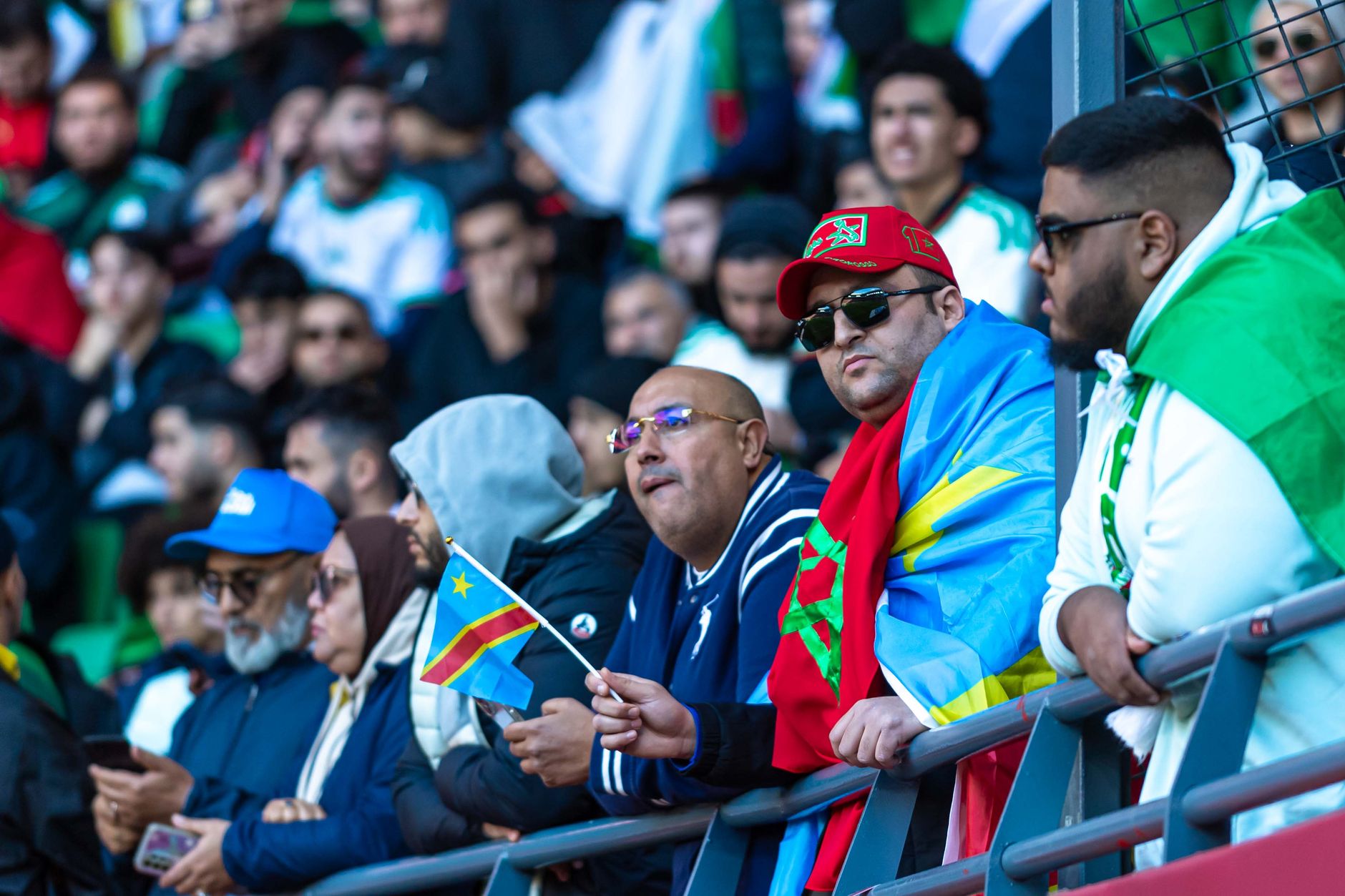
Photo by Guylain Kipoke on Pexels
The Bottom Line
The decisive fact is that the Algeria national football team and Austria national football team each collected 4 points from three Group J matches, recording one win, one draw, and one defeat. However, the standings did not treat those identical records as identical outcomes: Austria finished second and qualified directly into the knockout stage, whereas Algeria finished third but still progressed through the best-third-place ranking. The 3-3 scoreline therefore produced a shared statistical record but different tournament routes.
According to the match report published by ESPN, Austria led 2-1 and later 3-2 before Mahrez’s stoppage-time strike briefly appeared to eliminate them. Kalajdzic’s header at approximately the 96th minute restored Austria’s qualification position. This was not a cosmetic equalizer; it changed the immediate competitive consequences for Austria, Algeria, and Iran. Football Insights treats standings as a sequence of decision points rather than a simple points table, because one late goal can alter both ranking and opponent.
| Team | Points | Record | Final group position | Knockout consequence |
|---|---|---|---|---|
| Argentina | Not stated in supplied match data | Not stated | 1st | Advanced as group winner |
| Austria | 4 | 1-1-1 | 2nd | Faced Spain |
| Algeria | 4 | 1-1-1 | 3rd | Advanced as best third-place team |
| Iran | Eliminated | Not stated | Outside qualifying places | Knocked out |
The supplied match evidence confirms the 4-point totals and positions for Austria and Algeria, but it does not provide every Group J tiebreaking figure. That limitation matters. A careful standings analysis should not invent goals scored, goals conceded, or head-to-head calculations that are absent from the available data. For broader tournament context, readers can consult the official FIFA World Cup competition information, while BBC Sport independently recorded the 96th-minute Kalajdzic equalizer and the advancement of both teams.
Want the wider tournament context before comparing the teams? Use Football Insights’ daily World Cup coverage for standings, tactical changes, and match-state analysis.
What Players Actually See
Players do not experience a standings table as a static web page; they experience it through changing scoreboards, bench instructions, radio communication, and the clock. During Algeria versus Austria, the practical meaning of the table shifted several times. Austria’s opening goal from Marko Arnautovic in the 28th minute gave Austria a platform, but Algeria’s Rafik Belghali equalized before halftime. Marcel Sabitzer then restored Austria’s advantage in the 55th minute, creating a match state in which Algeria needed a response while Austria had a strong incentive to protect its qualification position.
Riyad Mahrez changed that calculation twice. His 60th-minute goal moved the score to 2-2, and his second goal at 90+3 appeared to make Algeria the winner at the exact moment Austria faced elimination pressure. Kalajdzic’s response at 90+6 turned the stadium from celebration to uncertainty within roughly three minutes. That sequence is the most important information gain in this matchup: the final standings were created not merely by the 3-3 result, but by the order and timing of six goals.
[Internal Link: 2026 World Cup group-stage tiebreakers]
From a tactical perspective, the final minutes show why match-state analysis can outperform pre-match reputation. Austria’s late equalizer came through Kalajdzic’s aerial threat, while Algeria’s late lead came from Mahrez’s individual quality and decision-making. The teams were therefore exposed to different kinds of pressure: Austria needed one attacking action after falling behind, while Algeria had to defend a lead that would have changed its own route and Austria’s fate. Believe it or not — I do: the final six minutes contained more standings information than the opening 60.
A practical viewing framework is:
- Identify the live points total after every goal.
- Track whether the team is qualifying directly, qualifying provisionally, or being eliminated.
- Separate the scoreline from the ranking mechanism.
- Check whether a late goal changes the opponent, not only the position.
- Confirm the final table through an authoritative source rather than relying on broadcast graphics.
That framework is useful for supporters, analysts, and anyone assessing football markets responsibly. It also prevents a common error: assuming that a third-place team has been eliminated automatically. In the 2026 format described by the supplied reports, Algeria advanced as one of eight best third-place teams, so third place was sufficient in this particular group-stage calculation.
See how the goal sequence affected qualification rather than only the final score.
What Are the 3 Things That Matter Most?
The three decisive variables were equal points, different ranking positions, and the late qualification swing. Austria and Algeria both finished on 4 points with records of 1-1-1, but Austria held second place and Algeria occupied third. The 3-3 score also eliminated Iran because neither Austria nor Algeria won; a victory by either side would have changed the best-third-place calculation described in the reference reports. Finally, Kalajdzic’s 96th-minute goal preserved Austria’s place while allowing Algeria to remain among the eight qualifying third-place teams.
1. Points alone did not tell the whole story
Four points sounds definitive, but it was only the first layer of the comparison. Austria’s 4 points translated into second place, while Algeria’s 4 points translated into third place. The two teams therefore shared the same basic record but did not receive the same seeding status. That distinction can influence opponent quality, venue allocation, preparation time, and public perception, even when both teams remain alive.
The result also demonstrates why a standings query should include the date and competition. “Algeria versus Austria standings” could refer to Group J after June 27, 2026, a historical ranking, or a head-to-head record. Here, the relevant event is the 2026 FIFA World Cup group-stage finale in Kansas City, Missouri, not a general FIFA ranking table. The date, tournament, and group label are essential disambiguators.
2. Position altered the next opponent
Austria’s second-place finish produced a Round of 32 match against Spain in Los Angeles, according to the supplied ESPN report. Algeria’s third-place qualification produced a Round of 32 match against Switzerland in Vancouver, British Columbia. This is a concrete competitive difference: both teams advanced, but they entered the knockout bracket through separate pathways against separate opponents.

Photo by Vlad Vasnetsov on Pexels
This is also where many quick summaries become misleading. Saying “both teams advanced” is accurate but incomplete; saying “Austria performed better” is also too broad unless the measure is specified. Austria ranked higher in Group J, yet Algeria’s late attacking response secured a result that kept its tournament alive. A proper comparison should therefore distinguish group ranking from knockout survival.
For readers following match predictions or football markets, opponent identity should be treated as a major variable rather than a footnote. Spain, the European champions named in the source report, represented a different tactical and historical challenge from Switzerland. No responsible assessment can evaluate Austria’s knockout prospects using only its 4-point total without incorporating the opponent.
3. The final goal had disproportionate value
Kalajdzic’s equalizer is the clearest example of a high-leverage football event. A 3-2 Algeria victory would have placed Austria on the edge of elimination, while the 3-3 draw allowed Austria to advance and also kept Algeria among the best third-place teams. In other words, one goal changed the qualification status of Austria without removing Algeria from the competition.
[Internal Link: World Cup knockout-stage qualification guide]
The timing matters because a 96th-minute goal leaves almost no opportunity for another tactical correction. Austria could not patiently build a long attack; it needed immediate execution. Algeria, meanwhile, had seemingly completed the difficult part by taking the lead through Mahrez at 90+3, but the match remained statistically unstable until the whistle. My data-driven conclusion is uncomfortable but protective: late leads are not equivalent to secure leads, especially when the opponent has a strong aerial target such as Kalajdzic.
Football Insights recommends recording the score, minute, and qualification implication together. A basic event log might look like this:
- 28': Arnautovic gives Austria the lead.
- 45': Belghali brings Algeria level.
- 55': Sabitzer puts Austria ahead again.
- 60': Mahrez restores parity.
- 90+3': Mahrez appears to give Algeria a winning lead.
- 90+6': Kalajdzic makes it 3-3 and rescues Austria.
That chronology is more informative than a headline that simply says “Austria and Algeria draw.” It explains why the match was strategically significant and why Iran was eliminated.
Want a sharper framework for reading late-game standings changes?
Edge Cases & Gotchas
The biggest trap is confusing a match result with a complete standings explanation. A 3-3 draw gives each team one point from the match, but the final group position depends on the points already accumulated, the results of other Group J fixtures, and the applicable ranking rules. The supplied material establishes that Austria and Algeria ended on 4 points, Austria finished second, Algeria finished third, and Iran was eliminated; it does not establish every numerical tiebreaker. Therefore, publishing an invented goal-difference table would create false precision.
A second trap is treating third place as synonymous with failure. The BBC report states that Algeria progressed as one of the eight best third-placed teams. That qualification route is structurally different from Austria’s direct second-place advancement, but it is still advancement. The distinction becomes particularly important in expanded tournaments, where the number of qualifying third-place teams can change the value of a draw during the final group match.
A third trap concerns historical comparison. The phrase “Algeria national football team vs Austria national football team standings” does not automatically describe FIFA’s global ranking system, UEFA coefficient tables, CAF qualification tables, or previous head-to-head meetings. It describes the tournament standings attached to this specific World Cup match unless the user adds another competition or date. For clean research, always record:
- Competition: 2026 FIFA World Cup.
- Group: Group J.
- Match date: June 27, 2026.
- Venue city: Kansas City, Missouri.
- Final score: Algeria 3-3 Austria.
- Final relevant totals: Austria 4 points, Algeria 4 points.
- Positions: Austria second, Algeria third.
- Knockout opponents: Spain for Austria, Switzerland for Algeria.

Photo by https://kaboompics.com/ on Pexels
[Internal Link: Algeria national team player statistics]
There is also a responsible-use issue for readers who follow betting content. Standings, probabilities, and market prices are not guarantees, and a dramatic result can make hindsight feel more reliable than it is. A disciplined analyst should separate observed facts—such as Mahrez’s two goals and Kalajdzic’s 96th-minute header—from forecasts about future matches. The FIFA Laws of the Game provide the governing framework for match incidents, but they do not predict outcomes. As the International Football Association Board’s laws explain, “a match is played by two teams,” which is a useful reminder that tactical interaction matters more than isolated reputation.
One further edge case is source timing. Live standings can change during simultaneous matches, and a broadcaster’s provisional table may differ from the confirmed post-match table. The safest process is to wait for the final whistle, verify the official competition table, and then cross-check reputable reporting from ESPN or BBC Sport. Believe it or not — I do: spending two additional minutes verifying the table is usually more valuable than spending 20 minutes arguing over an unconfirmed graphic.
Verdict
The Algeria national football team vs Austria national football team standings ended with both sides on 4 points and identical 1-1-1 records, but Austria ranked second and Algeria ranked third in Group J. The 3-3 draw was shaped by six goals: Arnautovic at 28 minutes, Belghali at 45, Sabitzer at 55, Mahrez at 60 and 90+3, and Kalajdzic at 90+6. Austria’s late equalizer preserved second place and set up a match with Spain; Algeria’s third-place route remained sufficient for a meeting with Switzerland as one of the eight best third-place teams.
The deeper lesson is that standings are relational, time-sensitive, and competition-specific. Points provide the foundation, but position, tiebreakers, simultaneous results, and qualification format determine what those points actually mean. For anyone researching this match, the most reliable summary is therefore not “Algeria and Austria drew,” but “both finished on 4 points, Austria placed second, Algeria placed third, and both advanced through different routes.” That is the distinction a careful reader should carry into every future tournament analysis.
Ready to compare more 2026 World Cup teams, fixtures, and tactical trends?
Frequently Asked Questions
Q: What were the Algeria national football team vs Austria national football team standings?
A: Austria finished second in Group J with 4 points, while Algeria finished third with 4 points. Both teams recorded one win, one draw, and one defeat across three group matches. Austria advanced directly through second place, whereas Algeria qualified as one of the eight best third-place teams. The supplied reports do not provide a complete goal-difference table, so additional tiebreaking figures should not be assumed.
Q: How did Algeria and Austria both qualify after a 3-3 draw?
A: Austria qualified because the 3-3 draw preserved its second-place position, while Algeria qualified through the best-third-place route. The late equalizer from Sasa Kalajdzic in the 96th minute prevented Austria from losing the match and falling into a more dangerous qualification position. Iran was eliminated because neither Algeria nor Austria won, according to the supplied ESPN and BBC Sport reports.
Q: What is the difference between Austria finishing second and Algeria finishing third?
A: Austria’s second-place finish and Algeria’s third-place finish created different knockout matchups despite both teams having 4 points. Austria was scheduled to face Spain in Los Angeles, while Algeria was scheduled to face Switzerland in Vancouver, British Columbia. The comparison shows why group position matters beyond survival: it determines the bracket route, opponent, and potentially the tactical preparation required.
Q: Who scored in Algeria versus Austria?
A: Marko Arnautovic and Marcel Sabitzer scored for Austria, while Rafik Belghali and Riyad Mahrez scored for Algeria, with Mahrez scoring twice. Arnautovic scored in the 28th minute, Belghali in the 45th, Sabitzer in the 55th, and Mahrez in the 60th and 90+3rd minutes. Sasa Kalajdzic scored Austria’s 96th-minute equalizer to complete the 3-3 result.
Q: Why was the 96th-minute goal so important?
A: Kalajdzic’s 96th-minute equalizer restored Austria’s qualification position after Algeria had taken a 3-2 lead through Mahrez. Without that goal, Austria would have faced a substantially different qualification scenario, while the draw allowed both teams to advance in the reports provided. The goal was especially important because it arrived almost immediately after Mahrez’s stoppage-time strike, leaving no meaningful time for another response.
Q: Where did Austria and Algeria play their knockout matches?
A: Austria was scheduled to face Spain in Los Angeles, and Algeria was scheduled to face Switzerland in Vancouver, British Columbia. These destinations and opponents followed their different Group J standings routes after the 3-3 draw. Readers should verify later fixture updates through FIFA or the relevant competition organizer because knockout schedules can change after official confirmation.
Q: Can the final Group J goal difference be inferred from the 3-3 score?
A: No, the final Group J goal difference cannot be calculated from this match alone. The 3-3 result establishes that both teams had zero goal difference in this fixture, but their overall tournament figures also depend on the other two group matches. Use the confirmed competition table or an authoritative source such as FIFA, ESPN, or BBC Sport rather than estimating unreported totals.
Thank you for reading.
Football Insights · Editorial Archive